
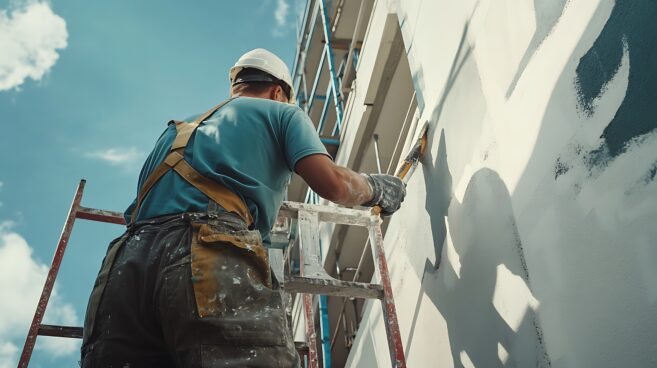
In a premises liability case, determining whether prior accidents occurring on a defendant’s premises are admissible can be a challenge for defendants. The “substantial similarity” requirement for prior accident admissibility helps Louisiana defendants to prevent prejudicial evidence from coming before the jury.
Clarifying the Standard for Prior Accident Evidence
Louisiana courts follow a three-part test for prior accident admissibility as summarized in Davis v. Louisiana Power & Light Co.: “to be relevant the other accident should occur at substantially the same place and under substantially the same conditions and must be caused by the same or similar defect, danger, act or omission.”[1] In this case a painter was electrocuted and injured when his aluminum ladder came into contact with an uninsulated power line. The court rejected prior accident evidence where accidents occurred at different locations with different electrical line configurations, even though both involved ladder contact with power lines.
Plaintiff argued on appeal that the trial court erred in disallowing evidence of prior accidents involving contact between aluminum ladders and overhead power lines. The Louisiana Fourth Circuit held in reply that evidence of prior accidents is admissible for the limited purpose of showing that a thing or place was dangerous, and the defendant knew of the dangerous condition. However, the prior accidents must be closely related in circumstance to the injury or hazard at issue.[2]
How Louisiana Courts Apply the Substantial Similarity Test
The court further held that these prior accidents were distinguishable because:
- First, the prior accidents did not occur at the apartment complex at issue, but rather at another nearby complex;
- Second, the workers injured in the prior accidents were conducting a variety of activities unrelated to painting, such as air conditioning repair and roofing; and
- Finally, the configuration of the lines at the apartment complex where the accident occurred was different than the complex where the prior accidents occurred.
Because the line configurations at the two apartment complexes were substantially different, the Fourth Circuit held that the prior accidents did not put the defendant on notice of an unreasonable risk of harm at the apartment complex where the accident occurred.[3]
This demonstrates that mere topical similarity is insufficient without substantial identity of circumstances.
Why the Requirement Matters
The substantial similarity requirement helps to prevent prejudicial evidence from reaching juries. As the Davis court explained, “Louisiana jurisprudence establishes that the admissibility of evidence of prior accidents is confined to those involving substantial identity of circumstance because of the risk of prejudice associated with informing a jury of other accidents.”[4]
Ambrose Stearns is a member of Kean Miller’s Offshore Energy & Marine group and practices in the firm’s Lafayette office. He advises a wide range of clients, particularly Louisiana-based and multistate energy companies, through every stage of development and across diverse legal needs. Ambrose’s experience includes general business and transactional counsel, regulatory guidance, entity formation, and the preparation of employment agreements, commercial contracts, partnering arrangements, and service agreements.
[1] Davis v. Louisiana Power & Light Co., 612 So.2d 235 (1992).
[2] Id. at 239.
[3] Id.
[4] Id. at 235.